
Get Beautiful Hardwood Flooring in South Elgin — Installed Right the First Time
Plamada Flooring brings 7+ years of hardwood installation, refinishing, and repair expertise directly to South Elgin homeowners and businesses. We handle every step from subfloor prep to the final finish coat — and we show up when we say we will.
How Does Hardwood Flooring Installation in South Elgin, IL Actually Work?
Plamada Flooring handles the complete hardwood installation process for South Elgin and Kane County homeowners — from initial site assessment through final walk-through. We cover new construction, full renovations, and replacement projects. This section walks you through exactly what to expect: the process sequence, project types we handle, and the installation methods we use.
From Subfloor to Finished Floor: How Does the Installation Process Work?
Our installation process follows a clear sequence that protects your home and your investment from day one. Most homeowners want to know what happens after they say yes — so here is every stage, explained plainly.
Our team starts every project with a thorough subfloor inspection — checking levelness, running moisture tests, and identifying any repair work before a single plank goes down. This matters because Illinois's climate creates moisture variation that affects how wood behaves after installation. Skipping proper moisture testing is one of the most common causes of post-installation squeaking, cupping, and gaps.
Wood acclimation is non-negotiable on our projects. Hardwood needs to sit inside your home for a minimum of 48–72 hours before installation. This lets the planks reach equilibrium with your home's temperature and humidity. Contractors who skip this step to save a day create floors that move too much after installation — a problem that shows up months later and is expensive to fix.
Most single-floor residential installations in South Elgin complete in one to three days once materials are properly acclimated. We give you a realistic timeline at the estimate — not a number designed to win the job.
If we discover subfloor issues mid-project — damaged boards, high moisture readings, unlevel sections — we stop and call you. You get a clear explanation of what we found, what fixing it involves, and what it costs. No surprise line items on the final invoice.
How Does the Installation Approach Change for New Builds, Renovations, and Replacement Projects?
The installation context shapes how we plan and sequence every project. We coordinate differently depending on where your project sits in the construction or renovation timeline.
Hardwood goes in after drywall, ceiling work, and paint — but before baseboard trim and cabinet toe-kicks. Getting this sequence right means trim fits perfectly against the floor. We coordinate directly with your general contractor or builder to confirm timing before we schedule our crew.
Renovation projects often mean working around other active trades. We manage our sequencing to stay out of each other's way while keeping the project moving. For carpet-to-hardwood replacements, we handle carpet and tack strip removal, subfloor inspection, and address any height changes that affect transition strips or door clearances. Many South Elgin homes have uneven or aging subfloors — we identify and repair these before a single plank is installed.
What Installation Methods Does Plamada Flooring Use and When Is Each One Right?
We use three hardwood installation methods. Choosing the wrong one for your subfloor type causes long-term problems: squeaking, movement, and delamination. Here is how we decide which method your project needs.
The traditional method for solid hardwood over wood subfloors. We use a pneumatic nailer through the tongue of each plank, securing it without visible fasteners. This is the right method when you have a wood joist subfloor above grade. It is not appropriate over a concrete slab.
Used over concrete slabs or where a pneumatic nailer cannot be used. This is the correct method for slab-on-grade installations — common in many newer Kane County subdivisions. We use a compatible flooring adhesive spread across the slab before planks are set. This creates a firm, stable bond that prevents movement and noise.
Used for engineered hardwood where planks lock together and are not fastened to the subfloor. Common in basements and over radiant heat systems. Do not float solid hardwood over radiant heat — the temperature cycles cause excessive movement that will damage the floor. We always match the method to your specific subfloor and species combination.
What Hardwood Flooring Options Are Right for Your South Elgin Home?
Our team helps you connect species, construction type, and finish into one decision — not three separate ones. Each choice affects how the floor looks, performs, and ages in your specific home. We bring physical samples to your home so you can see how they actually look in your lighting and alongside your existing décor.
How Do You Choose the Right Wood Species for Your Home?
We provide five core domestic species plus exotic options. Each has a different hardness level, grain character, and practical fit depending on your household's traffic, lifestyle, and aesthetic goals.
Open cathedral grain with warm reddish tones. The most widely available domestic species. Strong mid-range hardness suitable for most residential spaces. Takes stain well and is widely available for future matching.
Tighter grain than red oak with cooler, more neutral tones. Takes wire-brushed and light finishes beautifully. Popular in contemporary and transitional interiors. Strong middle-ground option that balances hardness with broad aesthetic range.
Tight, consistent grain with a light, creamy appearance. One of the hardest domestic species available. Excellent for high-traffic homes with children or heavy foot traffic. Less dramatic character but very durable and easy to clean.
The hardest widely available domestic species. Dramatic color variation and bold grain pattern. Best choice for active households with dogs. The natural character variation also hides minor surface scratches more effectively than uniform-grain species.
Rich, dark chocolate tones with flowing grain. Softer than the others at Janka 1,010 — better suited to formal dining rooms, master bedrooms, and spaces where appearance is prioritized over maximum dent resistance. Stunning visual result when properly finished.
Wide-plank options (5 inches and wider) are available across all domestic species and show more natural character and fewer seams. Exotic species like Brazilian cherry and tigerwood are beautiful but may respond more dramatically to Illinois humidity cycles than domestic species — we discuss this honestly before you commit.
Solid vs. Engineered Hardwood: What Should Illinois Homeowners Know?
A single piece of wood milled to a standard 3/4-inch thickness. Solid hardwood performs best on wood subfloors above grade. It can be sanded and refinished many times over its lifetime — often six or more times for a 3/4-inch board. The trade-off: solid hardwood is more sensitive to humidity changes.
Illinois winters are dry; Illinois summers are humid. That annual swing causes solid hardwood to contract and expand more than engineered construction. Proper acclimation and interior humidity management (ideally 35–55% relative humidity year-round) are essential for solid floors in our climate.
A real wood veneer over a cross-ply core. Engineered hardwood is real wood on the surface — this matters because many homeowners assume it is a synthetic substitute. It is not. The cross-ply construction makes engineered floors significantly more dimensionally stable under Illinois's humidity swings.
This makes engineered the correct choice for installation over concrete slabs, over radiant heat systems, and for basement family rooms. Most quality engineered floors can be refinished one to three times depending on veneer thickness. Quality products from reputable manufacturers do not delaminate under normal residential conditions.
What Finish Styles and Surface Textures Does Plamada Flooring Offer?
The classic look with a flat, even surface. Clean and easy to maintain, but shows minor scratches more readily. Good choice for formal rooms with lower daily traffic.
Artisan surface texture that mimics hand-tooled floors. Highly effective at hiding everyday wear and scratches. A practical choice for households with pets or children — surface variation breaks up the visual impact of minor marks.
A subtler open-grain texture that adds depth without the dramatic look of hand-scraping. Increasingly popular in contemporary interiors. Also effective at concealing minor scratches day-to-day.
Intentional knots, color variation, and surface marks that give a reclaimed or aged appearance. Beautiful in farmhouse, rustic, and eclectic interiors. Also one of the most forgiving surfaces for active households.
Prefinished vs. site-finished: Prefinished boards come coated at the factory under UV-cured conditions that are difficult to replicate on-site — they are typically more durable under normal residential conditions. Site-finished (unfinished) floors offer unlimited custom stain options but require cure time in the home. We walk you through both options during your estimate appointment.
What Hardwood Flooring Brands Does Plamada Flooring Work With?
We work with established manufacturers whose product lines are actively maintained — which matters when you need a replacement board years down the road.
Warranty terms differ by brand. We walk you through warranty comparisons before you purchase so you know exactly what coverage you have for the specific product you choose.
What Does Hardwood Floor Refinishing and Repair in South Elgin, IL Actually Involve?
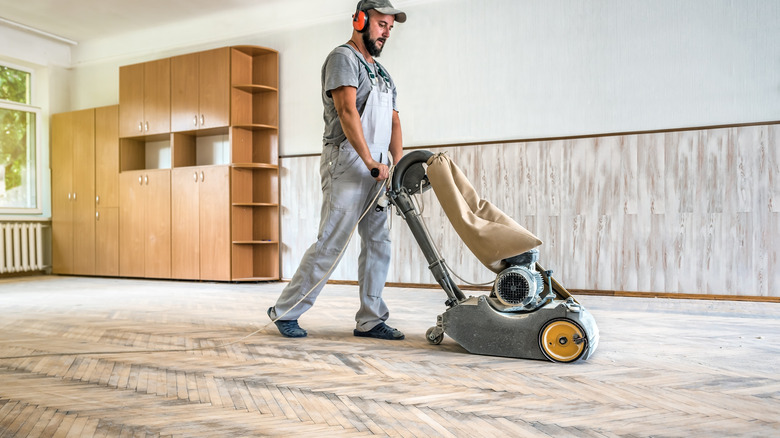
Not every worn hardwood floor needs replacement — and not every floor problem requires a full refinish either. Our team handles the full range from minor board repairs through complete dustless refinishing, and we help you figure out which level of intervention your floor actually needs rather than defaulting to the most expensive option.
When Should You Repair, Refinish, or Replace Your Hardwood Floor?
Damage is localized — individual boards that are cracked, stained, squeaky, or rotted while surrounding boards are in good condition. We replace only the affected boards and match the finish to the surrounding floor as closely as possible.
The floor surface is uniformly worn, scratched, or dull but boards are structurally sound and wear layer has sufficient thickness. For solid 3/4-inch floors, this means boards have not been sanded to nail head level. For engineered floors, the veneer needs at least 1/32 inch remaining. A screen-and-recoat is an intermediate option when the finish is dull but no sanding is needed.
Boards are severely cupped or buckled from moisture damage beyond recovery. Subfloor has been compromised. Wear layer has been fully depleted. We see homeowners told they need a full replacement when spot repair or refinishing would actually solve the problem — we give you an honest assessment before recommending the most expensive path.
What Does the Plamada Flooring Dustless Refinishing Process Look Like?
We confirm wear layer depth, check individual board conditions, and walk you through stain options before work begins. No surprises during the project.
We handle room preparation and protect adjacent areas before any sanding equipment touches your floor.
Our dustless system captures 98–99% of sanding dust at the source through a contained vacuum attached to the sanding equipment. Dust does not migrate through your HVAC system or settle on furniture throughout the home. This is the biggest difference from traditional open sanding.
Water-based finishes dry faster, have lower fume output, and stay clearer over time. Oil-based finishes penetrate more deeply, have a warmer amber tone, and hold up well under heavy traffic. We explain the trade-offs and let you choose.
Typically two to three finish coats with light screening between each coat for a smooth, even surface.
Water-based finishes are walkable within 24 hours but should not have rugs or furniture placed on them for 5–7 days. Oil-based finishes may require 3–7 days before foot traffic and up to 30 days for full hardness. We give you specific re-occupancy guidance for your chosen finish before we start.
Walk on it: 24 hours
Rugs & furniture: 5–7 days
Lower fume output — less disruption
Walk on it: 3–7 days
Full hardness: up to 30 days
Warmer amber tone, deeper penetration
We tell you exactly how long you need to stay off the floor before we start work — not after. If you have pets or children, we help you plan around the cure period.
What Common Hardwood Floor Repairs Does Plamada Flooring Handle?
Caused by movement between boards or between the subfloor and joists. We address this by securing from below with screws through the subfloor or using specialty injection methods from above — depending on access.
Seasonal gaps in Illinois winters are normal — wood contracts in dry heating season. Permanent gaps from structural movement or improper installation can be filled with color-matched wood filler or re-splined in more significant cases.
Light scratches respond to buffing and spot finish application. Deep scratches that penetrate into the wood itself may require board replacement rather than surface treatment alone.
Caused by moisture imbalance where the top face has less moisture than the bottom. Address the moisture source first — refinishing before moisture is stabilized will not hold and will need to be redone.
A more severe moisture event where boards have lifted off the subfloor entirely. Requires thorough drying, possible board replacement, and a full subfloor assessment before re-installation.
From appliance leaks, pipe failures, or basement moisture events. The primary concern is penetration depth and whether mold has formed beneath the boards. We assess both before recommending any repair approach.
Surface-level pet staining may respond to sanding and refinishing. Urine that has penetrated into the wood grain and subfloor typically requires board replacement in the affected area — we assess the penetration depth before quoting any repair.
How Does Plamada Flooring Match Existing Floors for Smooth Repairs?
Our matching process directly addresses one of the most technically demanding challenges in hardwood repair — and one of the most emotionally frustrating for homeowners.
Wood changes color as it oxidizes over time. A new board of the same species will initially look lighter or different from surrounding aged boards. This is normal, and it is something skilled installers address through careful species matching, custom blending of stain formulas, and feathering finish applications at repair edges.
Matching tongue-and-groove profile dimensions matters when replacing individual boards in older floors. South Elgin homes with original hardwood from mid-century construction may have non-standard plank widths that require sourcing from specialty suppliers. When the exact original species has been discontinued, we help you identify the closest available alternative before any work begins.
A truly smooth match on a heavily aged or custom-stained floor is difficult. Plamada Flooring delivers custom stain matching for hardwood flooring in South Elgin with an honest assessment of achievable results before work starts — so you make an informed decision and there are no surprises when the work is done.
Will Hardwood Hold Up in Your South Elgin Home? Pets, Kids, and Illinois Winters — Honest Answers
We hear this concern from almost every South Elgin homeowner before they commit to hardwood: they worry it won't survive real life. Kids dropping things, dogs running across it, Illinois winters drying it out. This section gives you specific, practical answers — not a sales pitch that promises hardwood is indestructible. Species selection, finish choice, and installation preparation are the three variables that determine how your floor actually holds up.
What Are the Best Hardwood Species and Finishes for an Active South Elgin Household?
The toughest domestic species. Best for households with dogs and heavy traffic. Bold grain variation also conceals minor scratches more effectively than uniform-grain species.
Second-hardest domestic option. Clean, light appearance. Excellent for children's play areas and high-traffic hallways. Resists denting well under normal residential use.
Strong middle-ground option. Beautiful and versatile across design styles. Hard enough for most active households and widely available for future repairs and additions.
Beautiful but softer than the others. Best reserved for formal dining rooms and bedrooms with lower daily traffic. Not the right choice for main hallways or dog runs.
Beyond species, finish choice matters for durability. Aluminum oxide-infused factory finishes on prefinished boards offer better scratch resistance than standard site-applied finishes. Wire-brushed and hand-scraped surface textures scatter light differently — minor surface scratches are far less visible day-to-day.
This is a practical durability advantage, not just an aesthetic one. Wider planks show more surface area and may make individual scratches more visible across a broader visual field than narrower strip flooring.
How Do You Protect Hardwood Floors from Illinois Humidity and Seasonal Shifts?
Wood is hygroscopic — it absorbs and releases moisture from the surrounding air. In Illinois, the shift from humid summers to dry heating-season winters creates annual humidity swings that cause hardwood to expand slightly in summer and contract in winter. Small gaps between boards in January are normal behavior in a properly installed floor. They are not a defect.
This only becomes a problem when floors are not correctly acclimated before installation or when indoor humidity is not managed. Before installation, hardwood must sit inside your home for a minimum of 48–72 hours. This lets the wood reach equilibrium with your home's temperature and humidity. Contractors who skip this step save a day — and create floors that move excessively post-installation.
For homeowners with solid hardwood floors, maintaining indoor relative humidity between 35% and 55% year-round is the single most effective long-term protection strategy. A whole-home humidifier integrated with your forced-air system is the most practical solution during Illinois heating season. Engineered hardwood construction handles humidity swings more gracefully and is the recommended choice for spaces where humidity management is difficult.
Hardwood Flooring and Pets: What Are the Honest Answers?
Is Hardwood Worth It? How Does It Compare to Other Flooring Options in South Elgin?
Hardwood costs more than most alternatives. For some homeowners in some situations, alternatives genuinely make more sense. This section gives you the information to make the right decision for your home and budget — not a section that argues for hardwood in every case.
How Does Hardwood Compare to LVP, Laminate, Tile, and Carpet?
Luxury vinyl plank is 100% waterproof, more comfortable than tile underfoot, and typically costs less per square foot installed — industry data generally places LVP material costs in the $3–$7/sq ft range versus $5–$12/sq ft for hardwood materials depending on species and grade. LVP cannot be refinished; hardwood can be restored multiple times over decades. Hardwood also adds stronger perceived value with homebuyers than LVP in most markets.
For wet areas or basement installations where waterproofing matters most, LVP is a legitimate choice. For main living areas where longevity and resale value matter, hardwood has the stronger long-term case.
Laminate is the most budget-accessible flooring option and has improved significantly in appearance. The honest trade-offs: laminate cannot be refinished when worn, has a hollow sound and feel underfoot that buyers often notice, and does not add equivalent resale value in the South Elgin and Kane County market. For homeowners on a strict budget who plan to sell within a few years, the lower upfront cost may make sense. For homeowners staying longer, hardwood's refinishability and durability typically make it the better value over a 10-to-20-year horizon.
Tile is more waterproof and durable in wet areas — it is the right choice for kitchens, bathrooms, and laundry rooms. It is cold and hard underfoot and is not an appropriate substitute for hardwood in living and dining spaces. Most South Elgin homes use both materials together: tile in wet zones, hardwood in living areas. These materials are complements, not competitors, in a well-designed home.
Carpet is warmer, quieter, and less expensive upfront. The practical downsides: it traps allergens and pet dander, is harder to thoroughly clean, and most current homebuyers actively prefer to remove carpet.
How Does Hardwood Flooring Affect Your South Elgin Home's Resale Value?
The National Association of Realtors has reported that a majority of real estate agents recommend that sellers refinish or replace hardwood floors before listing — and that buyers are willing to pay more for homes with hardwood already installed. Industry data commonly cites a 70–80% cost recovery rate for hardwood floor installation at resale. In the Chicago suburban corridor — which includes South Elgin, Kane County, and surrounding communities — buyers actively filter listings by flooring type.
The question of whether to install hardwood before listing or offer a flooring allowance credit has a consistent answer from most real estate professionals: buyers have difficulty visualizing finished floors and discount credits more heavily than the actual installation cost. Pre-sale installation is typically the financially stronger move.
One more South Elgin-specific scenario worth knowing: many mid-century homes in this area have original hardwood hidden beneath carpet. Plamada Flooring handles hardwood refinishing for South Elgin homeowners who discover original floors under carpet — typically at significantly lower cost than new installation while delivering comparable resale impact. If you suspect original hardwood beneath your carpet, we can check during an estimate appointment at no charge.
Industry-cited return range for hardwood floor installation — buyers in the Chicago suburban corridor consistently value hardwood over alternatives when evaluating homes.
What Are South Elgin Neighbors Saying About Plamada Flooring?
The best way to understand what working with us is like comes from homeowners who've been through it — neighbors in South Elgin and surrounding communities who had the same questions and concerns before their projects started.
I was nervous about the acclimation process after reading that Illinois winters can cause gaps. Adrian explained exactly what to expect before he started and told me what humidity range to maintain once the floors were in.
We had avoided refinishing for years because we were terrified about the dust spreading through our whole house. Plamada uses a dustless sanding system and they were serious about it — we checked every room after sanding was done and found almost no dust anywhere. The floors look incredible.
We have a slab foundation and I wasn't sure who could handle a glue-down installation properly. Adrian walked me through exactly why glue-down was the right method for our situation and what would happen if we used the wrong approach.
We had a pipe leak damage about 12 boards in our kitchen. Our floors are 20-year-old red oak and I was convinced the repair would look like a patch job. Adrian showed me what the match would look like before starting and was upfront that a perfect match on aged wood is difficult.
We have two large dogs and I was skeptical that hardwood would survive them. Adrian recommended hickory for the hardness and a wire-brushed finish to hide the inevitable scratches. Six months in and honestly — the floors look great.
We pulled up carpet before listing and found original hardwood underneath. Adrian came out, assessed the boards, and said we could refinish rather than replace — saving us a significant amount before the sale. He was honest about what the floors would look like after refinishing and didn't oversell the outcome.
Why Do Hardwood Flooring Quotes in South Elgin Vary So Much?
You've probably gotten two quotes for what seems like the same job and couldn't figure out why they were hundreds of dollars apart. Hardwood flooring pricing has a lot of legitimate variables — and some illegitimate ones. Understanding both puts you in a much stronger position when comparing bids from any contractor, including us.
What Actually Drives the Cost of a Hardwood Flooring Project?
Hardwood material costs vary significantly by species. Trade and industry benchmarks from sources like the National Wood Flooring Association typically show domestic species like red oak running in the $3–$8/sq ft range for materials, with premium domestic species like walnut and exotic imports running $8–$15+ per square foot. These are material-only market benchmarks — not installation quotes. Grade also matters: select-grade boards with fewer knots and character marks cost more than #1 common or #2 common grades.
Larger projects benefit from volume efficiency. Complex layouts — rooms with many angles, multiple transition points, diagonal installations, or intricate borders — require more labor time and generate more material waste. A straightforward rectangular living room costs less per square foot to install than a floor plan with five doorways and a bay window.
If your subfloor requires leveling, patching, or moisture mitigation before installation begins, this adds cost. A reputable contractor identifies subfloor issues during the estimate — not mid-project. If a contractor does not inspect the subfloor before quoting, ask why. That is where post-estimate surprises come from.
Glue-down over concrete requires adhesive material costs that nail-down over wood subfloors does not. Floating installations over engineered flooring have different labor requirements from either fastened method. The right method for your subfloor should drive this decision — not whichever is fastest for the installer.
Site-finished floors require additional on-site labor for sanding, staining, and applying finish coats — which adds both time and cost compared to prefinished boards. Prefinished eliminates this labor but limits your stain options. Both approaches have genuine advantages depending on your priorities.
Stair installation, threshold strips, shoe molding, and reducer transitions are often quoted separately and can represent meaningful additional cost in multi-level homes. Always ask specifically whether these are included before signing a quote. This is one of the most common sources of post-estimate invoice shock.
What Hidden Costs Should You Ask About Before Signing Any Flooring Quote?
Questions to Ask Any Contractor Before You Sign
We welcome every one of these questions — because we have clear answers to all of them. An estimate appointment with Plamada Flooring covers all of these points before you receive a quote number. You can also reach out to us at professional hardwood flooring services to learn more about how we structure our quotes.
What Financing Options Are Available for a Hardwood Flooring Project?
Hardwood flooring is a significant home investment, and flexible payment options matter. Financing for home improvement projects is widely available through third-party financing partners — programs like GreenSky and Synchrony Home offer options including deferred interest, fixed monthly payment, and same-as-cash arrangements for qualified applicants. Specific terms and availability vary, so ask about current financing options during your estimate appointment rather than assuming a specific program is active.
In some cases, hardwood floor installation may qualify for home equity financing. If you are planning a broader renovation, ask your lender whether bundling flooring into a renovation loan makes sense for your financial situation.
Ask about third-party financing programs during your free estimate appointment. Current availability and terms discussed at time of quote.
Ready to Find Out What Your Specific Project Will Cost?
You now have the context to evaluate any flooring quote intelligently. Our in-home estimate appointment is 30–45 minutes, obligation-free, and includes actual samples so you can see how species and finish options look in your home's actual lighting. We come to you — no showroom visit required.
Which Communities Does Plamada Flooring Serve Near South Elgin, IL?
We serve a wide area across Kane and Cook Counties. If you live in a surrounding community, don't assume you're outside our range before reaching out. You don't need to settle for whoever happens to be nearby — we bring the estimate and the samples directly to you.
What Communities Does Plamada Flooring Serve in Kane and Cook Counties?
- South Elgin, IL — Primary service area. Hardwood installation, refinishing, repair, and stair work for residential and commercial properties.
- Elgin, IL — Hardwood installation and refinishing serving residential neighborhoods throughout Elgin and the greater Fox River corridor.
- St. Charles, IL — Hardwood installation and refinishing serving the Fox River Valley corridor in Kane County.
- Geneva, IL — Full hardwood services for Geneva's residential community including new installations, refinishing, and floor repair.
- Bartlett, IL — Serving Bartlett homeowners with in-home consultations and same-Kane-County project experience.
- Streamwood, IL — Hardwood installation and refinishing for Cook County homeowners in the Streamwood area.
- Hanover Park, IL — Serving Hanover Park residents with the same in-home estimation process as our primary South Elgin service area.
- Wayne, IL — Hardwood flooring installation and refinishing for Wayne and Kane County residential properties.
We bring physical hardwood samples to your home so you can see how species and finish options actually look in your lighting and alongside your existing décor.
Get Your Free Hardwood Flooring Estimate in South Elgin, IL
We come to your home, bring real samples, measure the space, and give you a clear quote — no pressure, no obligation. The goal of the visit is to understand your project and give you accurate information, not to close a sale on the spot.
Why South Elgin Homeowners Choose Plamada Flooring
- Licensed & Insured in Illinois
- Local South Elgin Service Area
- In-Home Appointment — We Come to You
- No-Obligation Free Quote
Commercial projects in South Elgin, Elgin, and surrounding communities are also welcome — offices, retail spaces, and restaurants served.